
 Sandton Lifestyle Team
Monthly Digital Cover



Making Digital Sovereignty Work for South Africa
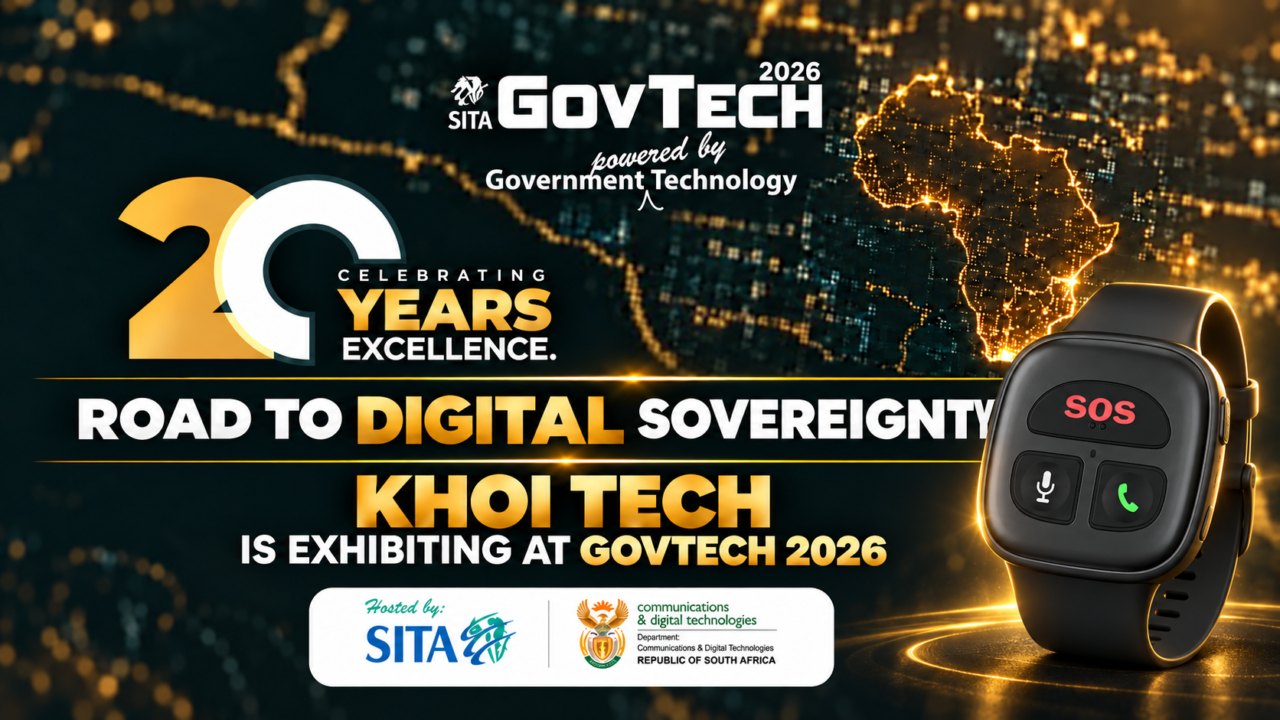
At GovTech 2026, the theme “Building Towards Digital Sovereignty: South Africa as Architect of its Digital Destiny for Citizens” – asks South Africa a question that can no longer be answered with policy language alone: when our economy, public services and personal wellbeing become increasingly digital, who will design the systems, own the intellectual property, manufacture the devices, govern the data and capture the value?
For Khoi Tech, this is not an abstract debate. It is the reason a technology company born in Soweto is exhibiting at GovTech this week. We are here to listen, learn and build partnerships, but also to make a firm contribution: South Africa will not achieve digital sovereignty simply by becoming a more sophisticated consumer of imported technology. We will achieve it when local innovators can move from the margins of the ecosystem into its markets, supply chains and decision-making rooms.
Digital sovereignty is sometimes mistaken for digital isolation. It is not a call to shut South Africa off from the world or to reject global expertise. No country builds advanced technology alone. Sovereignty is the capacity to choose our partnerships from a position of capability; to retain meaningful control over critical data, infrastructure and intellectual property; and to ensure that the value created by digitisation also builds South African companies, skills, jobs and productive capacity. That distinction matters because South Africa has made substantial gains in connectivity without yet converting digital adoption into broad-based technological ownership.
The 2024 National Data and Cloud Policy recognised data as a strategic resource and placed questions of cloud infrastructure, security, localisation, skills and economic development on the national agenda. South Africa’s digital-sovereignty challenge is therefore not a shortage of ambition. It is the distance between policy and productive capacity. That distance is where local technology companies must be allowed to work.
Our voices will be heard
When we joined the Manufacturing Working Group of the BRICS Business Council in 2024, our interest went beyond visibility. We wanted access to knowledge, components, suppliers and industrial partnerships that could support our long-term ambition to manufacture technology locally.
That ambition has travelled with us into every room in which South Africa’s technological future has been discussed. Through the National Policy Dialogue and engagements connected to South Africa’s G20 digital agenda, we have argued that African innovators must participate not only as beneficiaries of policy, but as informed contributors to it. GovTech is the next important point on that road. Khoi Tech arrives eager to share what we are learning, understand the needs of government and industry, and find partners prepared to turn promising local solutions into scaled national value.

Sovereignty becomes real when technology solves real problems
The strongest case for local innovation is not sentiment. It is relevance. South African companies understand the operating conditions, public-service pressures and human realities for which technology must be designed.
In mining, the future of safety will increasingly be wearable and data-enabled. Connected devices can help monitor indicators such as heart rate, blood-oxygen saturation, temperature, stress, activity and fatigue, supporting earlier intervention in physically demanding environments. Technology will never replace rigorous safety systems, clinical judgement or accountable management. It can, however, add a layer of real-time intelligence that helps employers act before a warning becomes an emergency. We are showcasing our Khoi Afriwatch S at GovTech with the technology to do just that.
In transport, similar capabilities can support driver wellness and fatigue-risk management. South Africa’s freight and passenger networks depend on people working long hours under demanding conditions. Wearable data, used ethically and with proper consent and governance, can help operators identify risk patterns and build a more preventive safety culture. The objective should not be surveillance of workers, but protection of lives.
For individual consumers, the same technology can support fitness, daily health awareness and personal safety. Features such as GPS, emergency alerts and health monitoring can make technology more immediately useful to families especially in the days when femicide is a headline for every major news platform. This is important because digital sovereignty must ultimately improve people’s agency and dignity. It should be felt in safer journeys, better-informed health decisions, stronger public services and products that understand the people who use them.
From pilots to productive scale
South Africa does not lack innovators. It lacks enough bridges between invention and scale. Too many local technology businesses are invited to demonstrate, pitch and participate, but remain outside long-term procurement, localisation programmes and industrial value chains. A seat at the table is meaningful only if the table can influence who gets to build.
A practical road to digital sovereignty should therefore do five things. It should use public and corporate procurement to create credible pathways for locally developed solutions. It should support testing environments in which innovators can validate technology safely in health, mining, transport and government. It should link incentives to skills transfer, local assembly and progressively deeper manufacturing. It should protect South African intellectual property while enabling responsible global collaboration. And it should treat data governance, cybersecurity, interoperability and user consent as design requirements from the beginning, not compliance tasks added at the end.
We know that this journey cannot be completed by one company. It requires government, universities, funders, established industry, regulators and innovators to build together. That is why we approach GovTech 2026 with eagerness and humility. We are excited to showcase what is already possible across health, mining, transport, personal safety and wellness. We are equally excited about the lessons, insights and partnerships that can sharpen our work. Every conversation matters if it moves a South African innovation closer to adoption, a pilot closer to scale, or a young technologist closer to meaningful work.
By Seati Moloi, Founder and CEO of Khoi Tech
 Sandton Lifestyle Team