
 Sandton Lifestyle Team

Monthly Digital Cover



First Pocket Plaza on Johannesburg’s Walkable Network
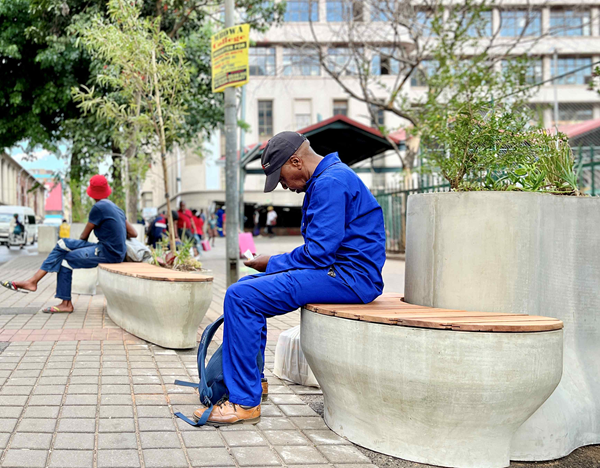
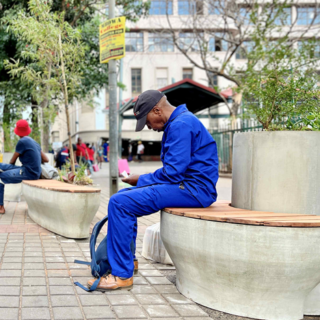
The Walkable Network is JICP’s spatial investment strategy for the inner city, grounded in the City of Johannesburg’s approved Inner City Transport Master Plan. It concentrates improvements along connected walking routes linking transport hubs, workplaces, shops, and public spaces. The aim is to improve everyday journeys, support local trade and encourage further private-sector investment.
Jointly funded by Global Affairs Canada under the SUNCASA project and the JICP, urban greening and Pocket Plazas are positioned to advance nature-based solutions for climate adaptation in the inner city of Johannesburg. The SUNCASA project is delivered in partnership with the International Institute for Sustainable Development (IISD), the World Resources Institute (WRI), City of Johannesburg, Johannesburg City Parks and Zoo, Environment, and Infrastructure Department and JICP as lead local partner.
“There is a great deal of effort going into the inner city. The opportunity is to connect those efforts so that each investment strengthens the next,” says David van Niekerk, CEO of JICP. “That is what the Walkable Network is designed to do: give the city, businesses and other partners a shared focus, improve everyday journeys and build confidence for further investment. This first pocket plaza is a practical step in that direction.”
Four uniquely designed pocket plazas are planned along the Joubert Street focus area between Park Station and Gandhi Square. These will be accompanied by tactical traffic-calming interventions led by Young Urbanists NPC, designed to slow vehicles and make crossings shorter and safer. The interventions will take place as street experiments that will act as a better method of public participation to see what works and what doesn’t across these major intersections along Joubert St. Walkable Network bins will support a cleaner inner city, with further tree planting planned across the wider network

The pocket plazas combine planting and seating to create small places to rest and meet. Trees will provide shade as they grow, bringing nature into a densely built part of the city and improving comfort for people on foot.
“We want to make room for both people and nature in streets that are used intensively every day,” says Hannelie Coetzee. “A place to sit alongside trees and planting can change how someone experiences their journey. We will learn from how people use these spaces and adapt the design as we go.”
The Joubert Street improvements form part of a year-long public engagement and testing process. Residents, traders, businesses, and commuters will help assess what works and what needs adjusting. Walks, cultural events, play, and other activities will help test how the spaces are used. Feedback and monitoring of movement, safety and comfort will guide permanent improvements and future expansion across the Walkable Network.
JICP will coordinate ongoing maintenance through its participant teams and Fix Squad, including tree care, cleaning, servicing bins, and minor repairs. This work will help protect the investment while creating local work and skills-development opportunities.
The collaboration includes JICP, SUNCASA partners IISD, WRI, City of Johannesburg, Johannesburg City Parks and Zoo, the City of Johannesburg’s Environment, and Infrastructure Services Department, Hannelie Coetzee and Young Urbanists NPC. Urban Space Management also assisted with deep cleaning before installation.
Members of the public joined the Joburg on Foot, walk on Saturday as part of Design Week South Africa, this proved to be a huge success and was led by Hannelie Coetzee with JICP and supported by Young Urbanists, the route followed Joubert Street from Park Station to Gandhi Square, exploring the improvements underway and those still planned.
All pics by Thusi Vukani
Follow the JICP on:
Facebook: Johannesburg Inner City Partnership
IG: jhbpartnership
 Sandton Lifestyle Team