

 Sandton Lifestyle Team
Monthly Digital Cover


133 Gauteng Learners Rise as Champions of Safer, Smarter Futures
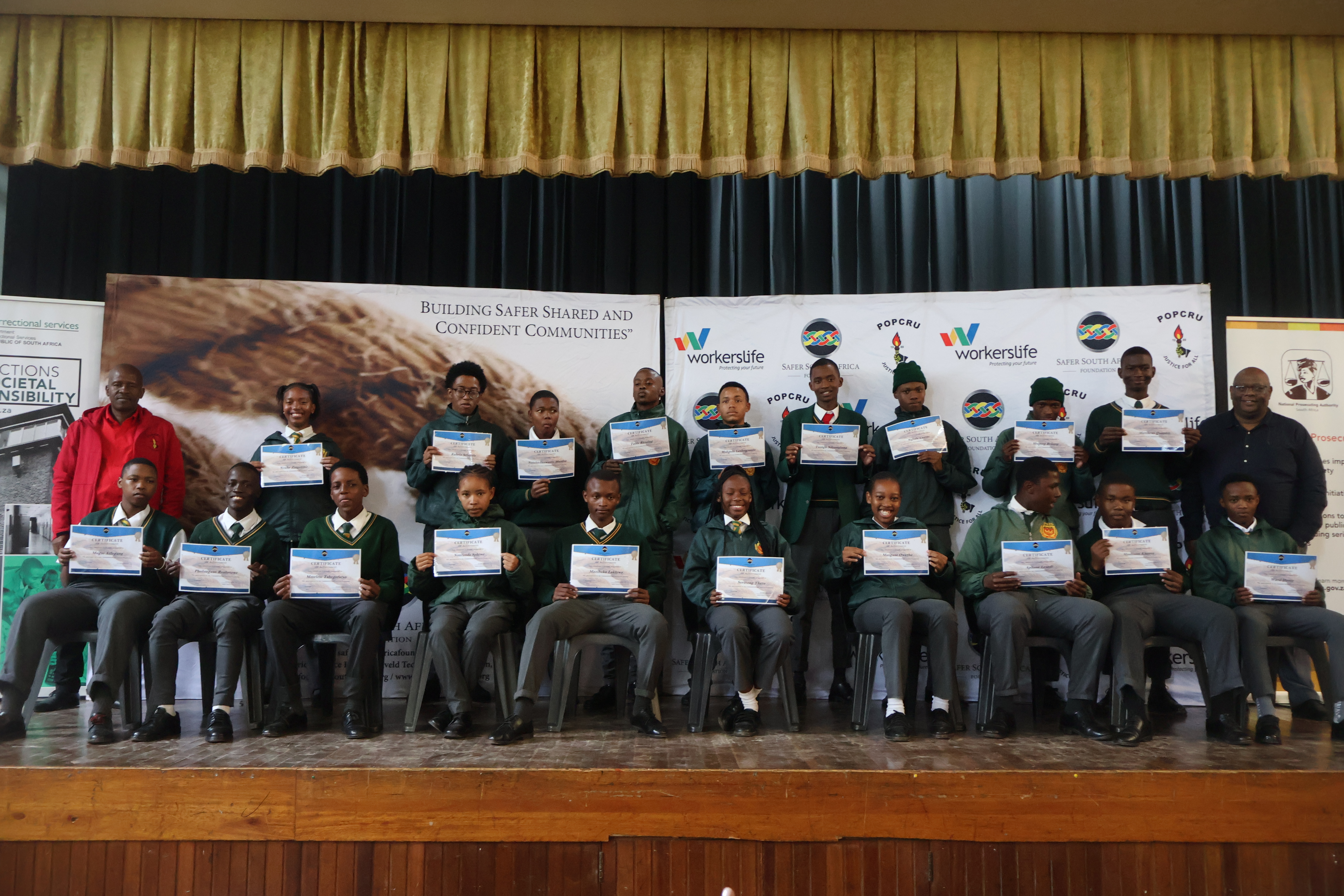
At a time when schools across Gauteng are grappling with a worrying rise in bullying, violence, and online harassment, a powerful counternarrative is emerging, one rooted in awareness, accountability, and empowerment.
At Princess High School, 133 learners have graduated from the Communities and Justice Programme, an initiative led by the Safer South Africa Foundation in partnership with key public and private sector stakeholders.
Their achievement comes against the backdrop of several widely reported bullying incidents across Gauteng schools in recent months, including cases of violent assaults captured on video and shared on social media, as well as incidents of cyberbullying that have sparked national concern about learner safety, discipline, and the psychosocial pressures facing young people today.
These incidents have reignited urgent conversations about the culture within schools, the role of bystanders, and the long-term consequences of unchecked behaviour. In this context, the Communities and Justice Programme is not just relevant, it is essential.
Building Awareness in a Changing Social Landscape
This moment marks the continuation of a powerful legacy. Gauteng has long stood at the centre of South Africa’s struggle for justice and dignity, today, that struggle has evolved. The challenges facing young people are no longer only structural, they are social, behavioural, and increasingly digital.
The Communities and Justice Programme equips learners with a deep understanding of the justice system, the consequences of unlawful behaviour, and the importance of responsible citizenship. Through structured engagements with institutions such as the South African Police Service, National Prosecuting Authority, Department of Justice and Constitutional Development, and Department of Correctional Services, learners gain real-world insight into how justice is upheld and what happens when it is not.
From Awareness to Accountability
Importantly, the programme directly addresses issues such as bullying, peer pressure, substance abuse, and cybercrime, challenges that are increasingly shaping learner experiences in Gauteng schools.
Learners participate in experiential learning, including court visits where they witness real cases and engage with justice officials. These experiences dismantle the often romanticised perceptions of crime and expose the serious, life-altering consequences of harmful behaviour.
In parallel, during Financial Literacy Month, the programme integrates financial education in partnership with the Banking Association South Africa, empowering learners with critical skills in budgeting, saving, and protecting themselves from financial exploitation and cyber-related risks.
A Timely Intervention
“Gauteng has always been the heartbeat of change in South Africa, and today, that change lives within our young people,” said Ms. Edna Mamonyane, Gauteng Provincial Coordinator for the Safer South Africa Foundation.
“What we are witnessing is a shift from vulnerability to empowerment. At a time when bullying and violence are making headlines, programmes like this give learners the tools to choose differently, to act responsibly, and to lead with integrity. This is how we build safer communities.”
Unmasking the Real Consequences of Crime
Advocate Leornard Dakile, representing the National Prosecuting Authority,
emphasised the importance of exposing learners to the realities of the justice system:
“Through our work with the Communities and Justice Programme, we have seen the profound impact that direct exposure to the justice system has on young people. When learners step into a courtroom and witness real proceedings, they begin to understand that actions have consequences that extend far beyond the moment.
These experiences help to dismantle the myths and misconceptions around crime, including behaviours like bullying and violence, which are often minimised. Instead, learners gain a clear understanding of accountability, responsibility, and the long-term implications of their choices. This awareness is critical in shaping a generation that respects the law and values human dignity.”
Shaping the Next Generation of Leaders
The certificate award ceremony on 22 April 2026 celebrates more than participation, it recognises a new generation of informed, responsible, and socially conscious young leaders. As South Africa commemorates Freedom Month, this initiative stands as a
powerful reminder:
The struggle for freedom has evolved.
 Sandton Lifestyle Team