
 Sandton Lifestyle Team


Monthly Digital Cover


Tomorrow’s Solutions Start in Today’s Classrooms
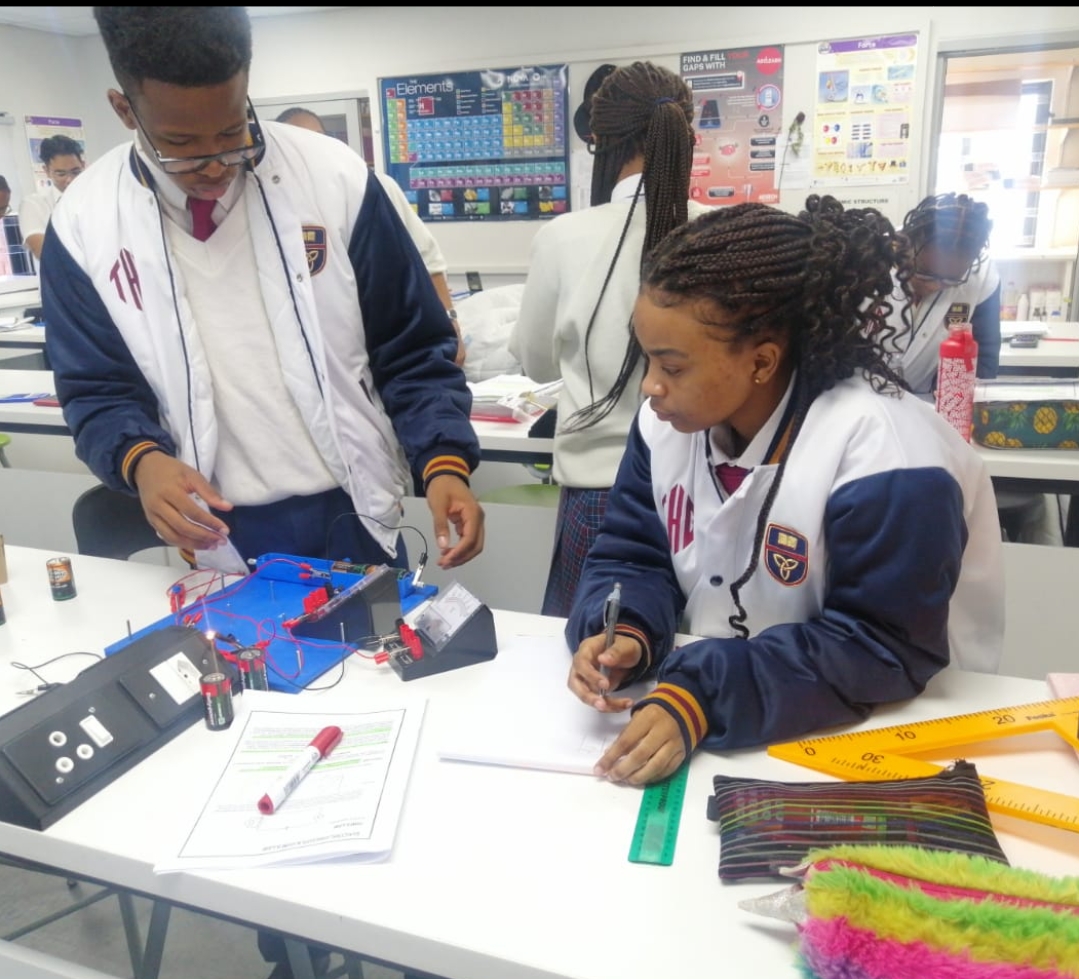
World Science Day for Peace and Development highlights why children need opportunities to investigate, innovate and turn knowledge into positive change.
A child asking why ice melts could be taking the first step towards solving tomorrow’s water challenges. Scientific thinking begins with curiosity, but its value stretches far beyond classroom experiments: it helps children question, investigate and make informed decisions.
World Science Day for Peace and Development, observed on 10 November, offers an opportunity to explore how science education connects discovery with responsibility. Trinityhouse Schools’ proposed message is clear: scientific understanding matters at every age, regardless of a student’s eventual career.
“Science teaches children that a question is worth exploring and an answer needs evidence,” says Kgaogelo Kekana, Science Teacher at Trinityhouse School Glenvista. “Those habits help them navigate everyday choices, understand different perspectives and approach unfamiliar problems with confidence.”

Small discoveries, big possibilities
During the Pre-Primary years, science starts through play. Watching seeds sprout, exploring shadows or predicting which objects will float turns familiar experiences into opportunities for discovery.
Teachers can nurture this curiosity by asking open questions: What do you notice? What might happen next? How could we find out?
“Children do not need complicated equipment to think scientifically,” says Kekana. “They need time to explore, adults who welcome their questions and encouragement to describe what they see.”
These early experiences also develop language, observation and the confidence to try again when predictions prove incorrect.
Turning curiosity into investigation
Primary School provides opportunities to move beyond noticing towards testing ideas. Students can compare plant growth, investigate materials or design simple structures, learning to record observations and explain their reasoning.
Practical investigations make room for creativity while introducing fair testing and evidence. A collapsed model bridge becomes an invitation to reconsider the design.
“An unexpected result is valuable information,” says Kekana. “Helping students ask what happened, rather than simply labelling an experiment a failure, builds perseverance and adaptability.”
Group projects also teach students to share resources, listen carefully and evaluate suggestions respectfully. These are skills that strengthen both scientific work and relationships.
Connecting knowledge with responsibility
High School science can connect classroom concepts with South African challenges, including water quality, energy use and waste management. Investigating such issues helps students recognise that innovation can mean improving an everyday process or developing an affordable local solution.
Scientific literacy also becomes essential when assessing online claims. Students should learn to examine sources, question methods and distinguish reliable evidence from persuasive language.
“Knowledge carries responsibility,” says Kekana. “Students need opportunities to consider who benefits from an innovation, what risks it introduces and whether its use is fair.”
Keeping discovery alive at home
Parents can encourage scientific thinking through cooking, gardening and observing weather patterns. Asking children to explain their predictions is often more valuable than supplying an immediate answer.
“The aim is not to raise a generation with every answer,” says Kekana. “It is to raise young people who ask thoughtful questions, work together and use what they discover to improve lives.”
Tomorrow’s breakthroughs begin with the questions children ask today. Nurturing curiosity in Pre-Primary, strengthening investigation in Primary School and developing critical thinking in High School helps young people turn knowledge into meaningful action.
Science education’s greatest contribution is a generation equipped to challenge misinformation, collaborate across differences and create solutions that make communities healthier, more peaceful and more sustainable. Every question welcomed today opens a possibility for a better tomorrow.
 Sandton Lifestyle Team