

 Sandton Lifestyle Team


Monthly Digital Cover

The World of Work in 2027: How AI, Workplace Networks and Human Connection Will Reshape Work
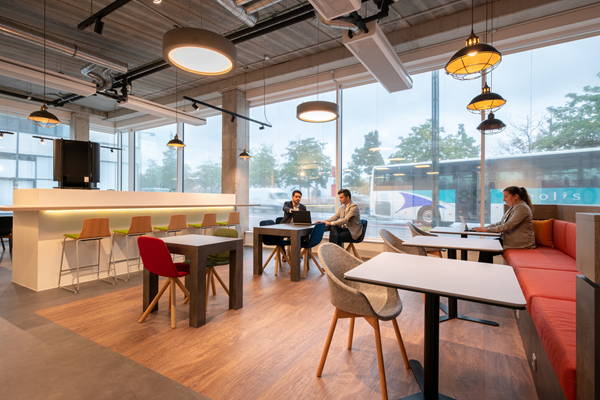
The office has to earn its place in 2027
In 2027, businesses will expect more from the workplace. As AI transforms how work gets done and companies continue to focus on productivity and costs, workplaces will increasingly be judged by the value they deliver, not simply how much space is occupied.
Commute time and employee wellbeing will become bigger considerations as AI takes on more routine work. The workplace will be judged on bringing people together to collaborate, learn and build relationships. Against this backdrop, International Workplace Group (IWG), the world’s largest platform for work with brands including Spaces, Regus and HQ, reveals the top trends set to shape the world of work in 2027.
Christian Schmitz, CEO of International Workplace Group, comments:

“2027 will be the year businesses get more demanding about what they need from the workplace. Every square foot needs to deliver value. It has to help people be more productive, bring teams together and give businesses the flexibility to adapt quickly as AI changes how work gets done.”
Modus OperandAI
AI will become less of a tool and more of a co-worker. As AI agents take on more routine work, employees will spend more time directing, reviewing and applying their output.
Leaders will need to redesign teams and workflows around a workforce made up of both people and AI, while ensuring clear human accountability for outcomes. IWG’s new Z-Suite Report: How a New Generation is Evolving the Boardroom found that 79% of young leaders believe AI is already helping them perform tasks beyond their current seniority.
In 2027, the challenge for leaders will shift from introducing AI to working out how people and AI can work together most effectively, while keeping people accountable for the decisions that matter.
The Workplace Will Become a Platform
In 2027, businesses will increasingly move away from thinking about the workplace as a fixed portfolio of offices. Instead, they will use a network of headquarters, local offices and on-demand space that can scale with changing needs.
AI will accelerate this shift by making future space requirements harder to predict. Recent IWG research found that 88% of CEOs believe the rise of AI is increasing the need for flexibility in their workplace strategy, while 60% say it has become harder to predict future office space requirements.1
“Return to Office” Will Become “Return to People”
In 2027, companies will increasingly recognise that people don’t commute just to sit on video calls or complete work they could do elsewhere. Workplace strategy will become more deliberately centred around human connection, with office time focused on mentoring, collaboration, learning, creativity and relationship-building. Success will be measured less by attendance and more by whether time together strengthens relationships and improves how people work.
It’s Not What You Know, It’s Who AI Knows
As relationships become increasingly valuable, organisations will use AI to connect employees with mentors, colleagues, clients and opportunities they may never have found on their own. AI-powered matchmaking is already moving into the mainstream, helping people build more relevant networks. For businesses, networking will become less of a chance occurrence and more of a strategic capability, designed to spark stronger connections, knowledge-sharing and growth.
The Rise of the “Workplace Stack”
Companies already plan technology as a stack, with each layer doing a different job. Workplace planning is heading the same way, combining headquarters, local flexible workspace and home offices, with digital tools connecting them. For employees, this adds up to an “office passport”: access to professional workspace across cities and suburbs and, for international teams, other countries. The employer’s role will be to provide these different layers, giving teams access to the spaces that best support how and where they work.
The Human Skills Premium
As AI takes on more routine work, human skills such as judgement, creativity and empathy will become more valuable, with employees valued less for what they know and more for how they think and work with others. Stanford University’s Future of Work with AI Agents research 3 suggests this shift, with human value moving towards skills that technology cannot easily replicate. Organisations that thrive will stop treating these as “soft skills” and invest in them as seriously as technical expertise.
Commute Time Will Enter the Workplace ROI Equation
In 2027, long commutes will be seen not just as an employee inconvenience, but a business cost. Organisations will increasingly assess commute time alongside rent and utilisation, weighing the cost of centralised offices against the productivity and talent lost to lengthy journeys.
Next year, new Corporate Sustainability Reporting Directive (CSRD) rules will require European companies to report more rigorously on Scope 3 emissions, increasing scrutiny of employee commuting and workplace energy use, while the principle will have relevance globally. This will fuel demand for professional workspaces closer to home, and commuting will become a bigger part of the workplace ROI equation.
“The Hybrid Health Dividend” Will Become a Corporate KPI
In 2027, organisations will start treating the health benefits of hybrid working as a business outcome in their own right, not just a perk for employees. Reduced stress, lower burnout, better sleep and improved mental wellbeing could be measured alongside productivity, helping businesses understand the wider impact of how and where people work. This could see measures such as sickness absence and wellbeing scores become a bigger part of how workplace success is assessed.
The Geography of Hiring Is Changing
Businesses will increasingly look beyond traditional business hubs to find the skills they need, building teams in new cities and regional markets. Flexible workspace will make it easier to establish a presence wherever talent is available, without the cost and commitment of a permanent office.
The shift is already taking shape: Savills research found that 63% of organisations have seen talent availability decline in their headquarters’ location, while 16% have already expanded into new markets to access the talent they need.
Christian Schmitz, CEO of International Workplace Group, comments:
“In 2027, businesses will build their workplace strategies around flexibility. They need to be able to adapt quickly as technology changes how work gets done, while giving people access to great places to work wherever they need them.
“That is why we will see more companies move away from large fixed real estate commitments towards flexible workspace networks. It gives businesses the ability to scale up or down as their needs change, control costs, and give their people more choice. It is a better model for a world where the only thing we can predict with certainty is more change.”
 Sandton Lifestyle Team