
 Sandton Lifestyle Team


Monthly Digital Cover


Why the Words “Mini LED” Don’t Tell You What You Think They Do
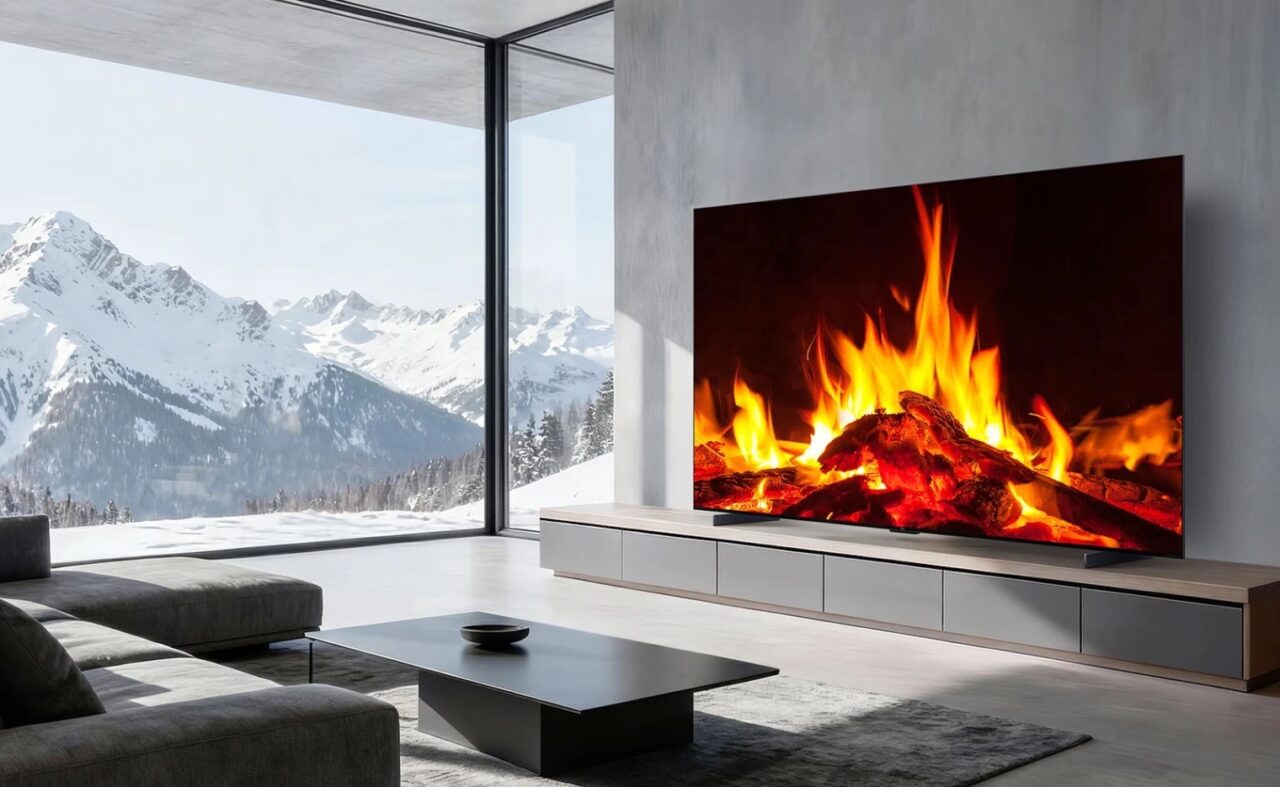
Stand a shopper between two Mini LED televisions of roughly the same size and roughly the same price, and something strange tends to happen: they often can’t tell which one is supposed to be better. Both boxes say Mini LED. And yet, switched on side by side and fed the same dark, high-contrast scene, one television renders a clean, inky black with a single bright highlight cutting through it — and the other shows something closer to a grey haze with a bright smudge in the middle. Ask most sales staff why, and you’ll get a shrug, or worse, a confident answer that happens to be wrong.
This is not a hypothetical. It is, increasingly, the default retail experience for anyone shopping for a television in 2026, and it is worth asking how we got here.
A genuine advance, then a marketing catch-all
Mini LED is a real engineering achievement. Shrinking the LEDs used in a television’s backlight allows manufacturers to pack far more of them behind the same panel, which in turn allows the screen to be divided into many more independently controlled zones of light and dark. Used properly, that’s a meaningful step toward the kind of contrast and detail that used to require a far more expensive display technology altogether.

The trouble is what happened next, which is more or less what happens to every genuinely useful piece of technical vocabulary once it starts selling televisions: it got detached from the engineering it was supposed to describe. “Mini LED” followed a well-worn path already cut by “4K,” “Smart TV” and “HDR” before it — terms that began as precise technical claims and ended up as checkboxes, applied across entire product ranges regardless of how faithfully each individual model actually implements the underlying idea.
The label describes the part, not the performance
Here is the part that rarely makes it onto a shelf sign: “Mini LED” is, strictly speaking, a description of the size of an individual LED chip. It says nothing about how many of those LEDs are packed behind the screen, how they’re arranged, or — most importantly — how intelligently their brightness is controlled. A manufacturer can use genuinely miniature LEDs and still wire them up in a way that delivers little of the picture-quality benefit the technology is capable of. That television is not lying when it calls itself Mini LED. It is simply not telling you the part of the story that determines whether the picture is actually good.
Three questions that separate the pack
The useful news is that the gap between a well-executed Mini LED panel and a poorly executed one comes down to a short list of concrete, checkable factors, rather than anything mysterious or proprietary: whether local dimming is controlled by hardware or approximated in software; how many independently controlled dimming zones the panel actually has; and whether the backlight is arranged as a full array behind the whole screen, or merely strung around its edges. None of these require an engineering degree to understand, and none of them require taking a brand’s word for it on faith. A small but growing number of manufacturers now publish at least part of this information — TCL, for instance, lists dimming-zone counts across its Mini LED range, which is a useful reference point for what fuller disclosure can look like in practice, even where the underlying hardware architecture itself isn’t spelled out.
Why this matters more now than it used to
As Mini LED pricing continues to fall and the technology spreads from flagship models down into the mid-range and budget tiers, the assumption that “Mini LED means Mini LED” is only going to become more costly for shoppers who rely on it. Each of those three questions — hardware versus software dimming, zone count, and backlight architecture — is simple enough to check without any technical background, and each matters more than almost anything else printed on the box. Together, they give anyone walking into a showroom this year an actual framework to work from, rather than a label to take on faith.
For more information, visit https://www.tcl.com/southafrica/en.
 Sandton Lifestyle Team